CAS’s Article 5 Rulings and How They Finally Curbed the Multi-Club Ownership Trend

Secure a UEFA tournament spot for next season. An undeniable goal for every football club living precariously under the UEFA umbrella.
With league titles often out of reach for most teams by the time two-thirds of the season eclipses, reaching a spot to play in UEFA’s “prestigious” tournaments is a secondary prize that every team equally covets. For some clubs, a season without qualifying is a failure. For others, finally punching a ticket into a UEFA competition reverberates through the foundations of a club, filling the stands with an exuberant pride (and a financial boost) that only an extended European tournament drought (or a board-induced relegation battle) can erode over time.
That is, unless your team’s owner collects football teams like overpriced sports cars and isn’t exactly great at following recently enacted league legislation.
Given the way football club boards are structured these days, it is extremely common for a shareholder who owns a stake in one club to also hold investments in other clubs across the globe. A prime example is the obnoxiously popular Wrexham ownership braintrust of Ryan Reynolds and Rob “Mac” McElhenney. After purchasing Wrexham in February of 2021 and earning promotion in back-to-back-to-back seasons (stop me if you’ve heard the story), the duo also delved into other football ventures in Mexico (purchasing a minority stake of Club Necaxa in 2024) and Colombia (adding Club Deportivo La Equidad in 2025).
Ingestion of the football ownership drug often widens the eyes (and pupils) of these investors, making it extremely difficult for them to turn down similar exciting investment opportunities which inevitably present themselves once they have proven some semblance of business acumen that translates into on-pitch success.
UEFA Attempts to Steer Clear of MCO Controversies
Multi-club ownership (MCO) has become a growing concern for UEFA and other federations worldwide, but it is hardly new. Following the Court of Arbitration for Sport’s (CAS) 1998 ruling in AEK Athens & Slavia Prague v. UEFA (CAS 98/200), MCOs would require adherence to strict UEFA protocols designed to avoid any perceived conflicts of interest that might brew within one of its highly scrutinized international club tournaments.
The fallout from this decision would eventually crush the spirits of several fanbases decades later, all in the name of steering clear of controversy. However, how we got to this point should not be quickly overlooked.
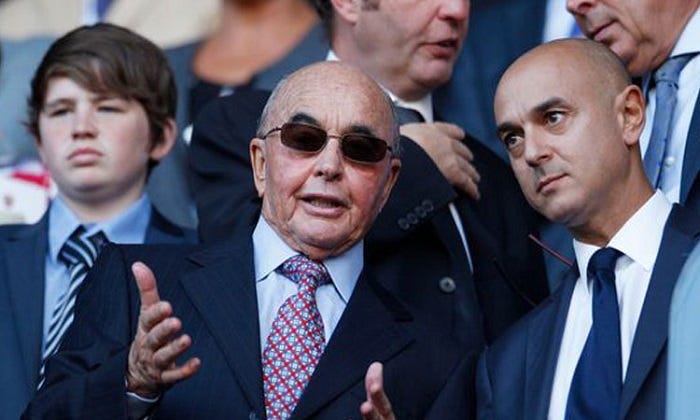
In the late 90s, English National Investments Company (ENIC) – the absolutely terrible company that, in the present day, is soullessly driving Tottenham Hotspur into the ground – created a business model surrounding the collection of various football clubs across Europe, acquiring controlling interests in AEK PAE (Greece), SK Slavia Prague (Czech), Vicenza Calcio SpA (Italy), FC Basel (Swiss), and a minority interest in Glasgow Rangers FC (Scottish), all between the years of 1997 and 1998.
During the 1997/98 European football season, AEK PAE, Slavia Prague, and Vicenza all reached the quarter-finals of the UEFA Cup Winners’ Cup. Although the three ENIC-owned clubs were not drawn to play against each other in the quarterfinals, and only one of them reached the semi-finals (AEK lost to the Russian club Lokomotiv Moscow, Slavia lost to the German club VfB Stuttgart, whereas Vicenza defeated the Dutch club Roda JC), the worrisome logistics of a situation where three out of eight clubs left in the same competition belonged to a single owner starred UEFA squarely in the face, with only mere luck helping them avoid a complete credibility catastrophe.
To combat those feelings of stomach-churning uncertainty in future iterations, UEFA enacted the “Contested Rule” into its bylaws faster than Lionel Messi can lace a 20-yard free kick past a diving goalie. In May 1998, the Contested Rule, titled “Integrity of the UEFA Club Competitions: Independence of the Clubs,” became a regulation for all clubs participating in one of their tournaments.
In June 1998, UEFA informed AEK of the criteria adopted by the UEFA Committee for Club Competitions, stating that it would not be admitted to the UEFA Cup, while Slavia was still authorized to compete. In the same letter, UEFA granted AEK a final opportunity to participate in the competition if it submitted a statement confirming a change of control in compliance with the Contested Rule. Both clubs filed for arbitration and interim relief, to which CAS eventually granted a stay of the rule for the 1998/99 season, essentially due to lack of notice, allowing both clubs to play because UEFA had introduced the rule too late in the cycle.
However, the Panel also ruled that the Contested Rule was well within UEFA’s purview for preventing any perceived conflict of interest, finding that it is an
“essential feature for the organization of a professional football competition and is not more extensive than necessary to serve the fundamental goal of preventing conflicts of interest which would be publicly perceived as affecting the authenticity, and thus the uncertainty, of results in UEFA competitions.” (AEK Athens and SK Slavia Prague v. UEFA, CAS 98/200, Award of 20 August 1999, para. 136.)
The Panel further stated that the Contested Rule was,
“proportionate to such legitimate objective and finds that no viable and realistic less restrictive alternatives exist. As a result, also in the light of the previous findings that the Contested Rule does not appear to have the object or effect of restricting competition, the Panel holds that the Contested Rule does not violate Article 81 (ex 85) of the EC Treaty.”(id.)
Following the CAS ruling, the “MCO Rule” was formally integrated into the regulations of every UEFA club competition as Article 5. The rule became fully effective for the 2000/2001 season, and UEFA later added a “decisive influence” clause to ensure the rule covered not just 50.1% majority ownership, but also any entity that could theoretically alter a club’s sporting or financial management. (Article 5.01(c)(4).)
Additionally, this case dropped a heavy hammer on MCO clubs desperately vying for the glory of a “Europe Spot.” CAS’s ruling confirmed that UEFA could legally prohibit clubs under common control from competing in the same tournament, granting UEFA wide discretion in the matter. The court agreed with UEFA that public perception of a conflict of interest is sufficient grounds for their intervention, even without proof of actual match-fixing or of the person(s) in question actually having the ability to create a conflict.
While the case was a huge win for UEFA, current MCO cases desperately clung onto the CAS mandate that UEFA must provide “procedural fairness” when adjusting any rules governing MCOs, meaning that regulations cannot be implemented mid-cycle or so late that clubs do not have sufficient time to adapt their operations. Despite experiencing various degrees of legal success, the dance between MCOs and UEFA continues to take a sideways path, one that continues to hinder the growth of MCOs.
Recent MCO Rulings Adding a Stronger Grip to UEFA’s Bite
Prior to the 2024/2025 season, UEFA sent a Circular in October to all members in its associations that MCO would provide written notice that assessment dates would be moved up three months, stating:
“For the 2024/25 season, the assessment date was 3 June 2024. This date was included in the last version of the men’s club competition regulations approved in March 2024…The proposed amendment brings the assessment date forward to 1 March for all club competitions. This new date is aligned with the club licensing and financial sustainability deadlines, including the deadline for the submission of club ownership information to UEFA.” (Emphasis Added)
In December 2024, UEFA took additional steps to notify 35 clubs known to be part of an MCO structure that held stakes in two European clubs with a high potential to qualify for UEFA club competitions, ensuring they were fully aware of the change in assessment date. In February 2025, the 2025/26 UCC Regulations, containing the assessment date amendment to Article 5.01, were formally adopted.
This is where UEFA’s recent MCO woes ran straight into a legal buzzsaw.
Trivela’s Terrible Timing
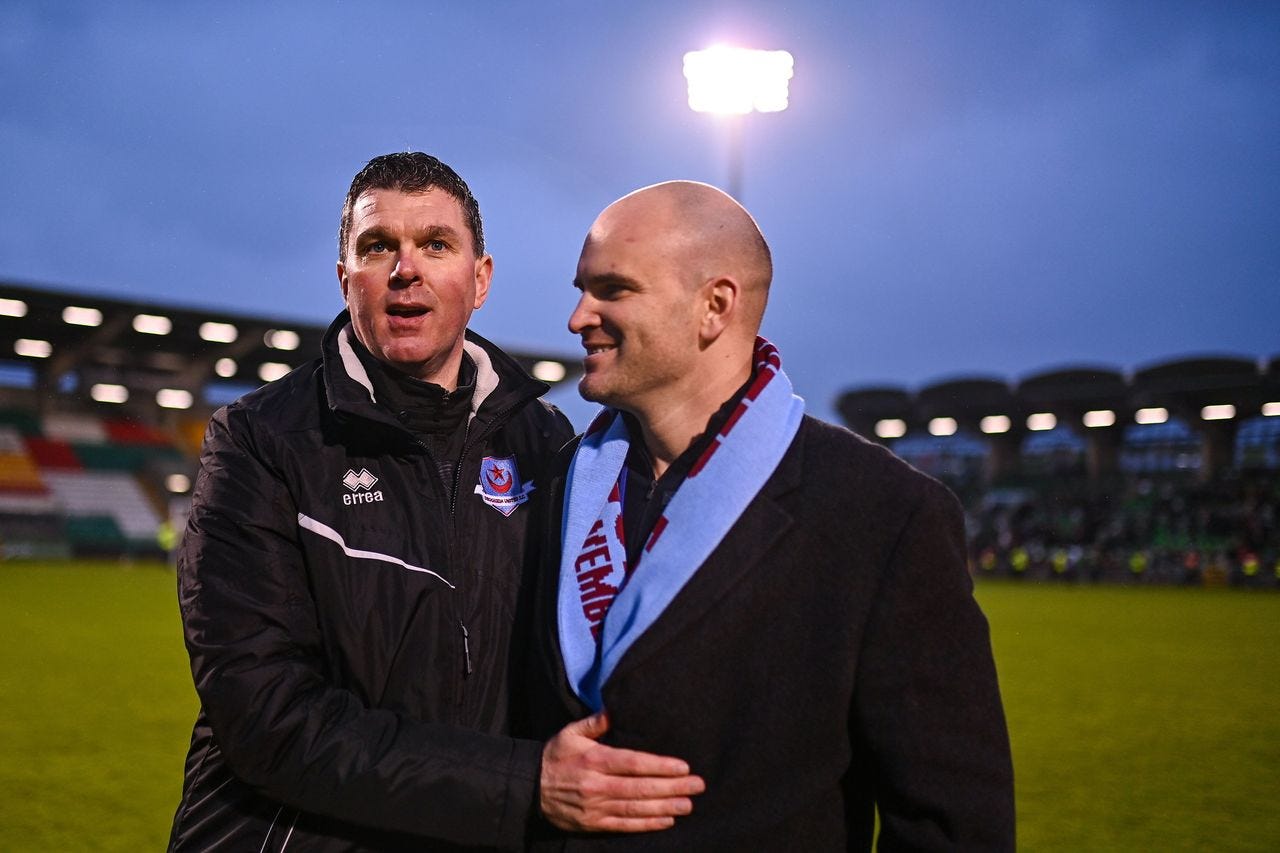
The first domino to clumsily fall and immediately blame someone else for their own negligence was the Trivela Group. An investment group formed in Birmingham, Alabama, by Benjamin Boycott and Kenneth Polk, Trivela began their collection of football clubs in 2022, acquiring a majority stake in Walsall FC, an EFL club in League Two at the time. About a year and a half later, Trivela was jonesing for more and proposed a 100% takeover of Drogheda United in the League of Ireland, which was eventually approved in February 2024.
A month after UEFA notified clubs of the accelerated deadline date for MCOs in the October Circular, Drogheda won the FI Cup, qualifying for the 2025/26 UEFA Conference League on sporting merit. At the time, Millwall was nowhere near sniffing a UEFA tournament spot, so Article 5 probably wasn’t a huge concern for Trivela. That is, until December 2024, when the Group acquired 80% of Silkeborg IF (“SIF”), a Danish football club that made more waves in the Danish Superliga than expected.
SIF finished 7th in the 2024/25 Danish Superliga, placing them at the top of the “Relegation Round” table. Under the Danish league format, this earned them a single-match playoff against the 4th-placed team (Randers FC) for the final European spot. Silkeborg won that match 3–1 on June 1, 2025, qualifying for the UEFA Champions League second qualifying round. Randers FC.
Unfortunately, for Drogheda FC and SIF, Trivela’s team failed to strictly follow Article 5, forcing UEFA to enact section 5.02, which reads:
If two or more clubs fail to meet the criteria aimed at ensuring the integrity of the competition, only one of them may be admitted to a UEFA club competition, in accordance with the following criteria (applicable in descending order) with the exception of the scenarios set out in Paragraph 5.04 and Paragraph 5.05:
a. the club which qualifies on sporting merit for the most prestigious UEFA club competition (i.e., in descending order: UEFA Champions League, UEFA Europa League or UEFA Conference League);
b. the club which was ranked highest in its domestic championship;
c. the club whose association is ranked highest in the access list (see Annex A).
Since both clubs qualified for the lowest-level tournament and UEFA’s rules clearly deemed SIF’s 7th-place finish in Denmark “superior” to Drogheda’s 9th-place finish in the League of Ireland, Drogheda’s bid to the UEFA Champions League was retracted, leaving Trivela with only SIF as a UEFA tournament participant for that season.
Despite providing UEFA with MCO declarations for both DUFC and SIF on March 12th, when adhering to a separate regulation that required clubs participating in UEFA competitions to submit information about their legal and ownership structure to UEFA, this was too little too late in the mind of UEFA’s legal team.
In Drogheda United FC v. UEFA, CAS 2025/A/11495, Award of 16 June 2025, Trivea pleaded with CAS that although UEFA sent out Circulars notifying that this proposed deadline adjustment, this was not enough notice since the amendment was only approved a month before the deadline, providing clubs with a scant amount of time to properly prepare. The panel did not buy it, ruling in favor of UEFA and finding that more than enough time was given to all MCOs about this change and that they should have planned accordingly to abide by them once UEFA formally adopted the new deadline.
The headline takeaway from CAS’s ruling in this case is that UEFA’s March 1st Assessment Deadline will be strictly upheld, demonstrating that, as long as UEFA provides sufficient notice, reasonable rule changes are within UEFA’s discretion.
Textor’s “Decisive Influence”

Just two months after its ruling in the Drogheda case, CAS handed down another MCO decision in Crystal Palace Football Club v. UEFA, Nottingham Forest FC & Olympique Lyonnais, CAS 2025/A/11604, Award of 11 August 2025, unsurprisingly solidifying the strictness of UEFA’s MCO framework.
As the story was well documented over most media outlets, this dispute centered on whether Crystal Palace and Olympique Lyonnais (OL) could both compete in the 2025/26 UEFA Europa League, given that John Textor held a majority stake in OL while serving as a director and significant shareholder of Crystal Palace.
CAS confirmed that as of March 1, 2025, the clubs were in breach of Article 5.01 because John Textor exercised “control” over OL and “decisive influence” over Crystal Palace. Crystal Palace argued that they should be allowed to “cure” the breach because Textor was in the process of selling his Palace shares. The Panel did not agree.
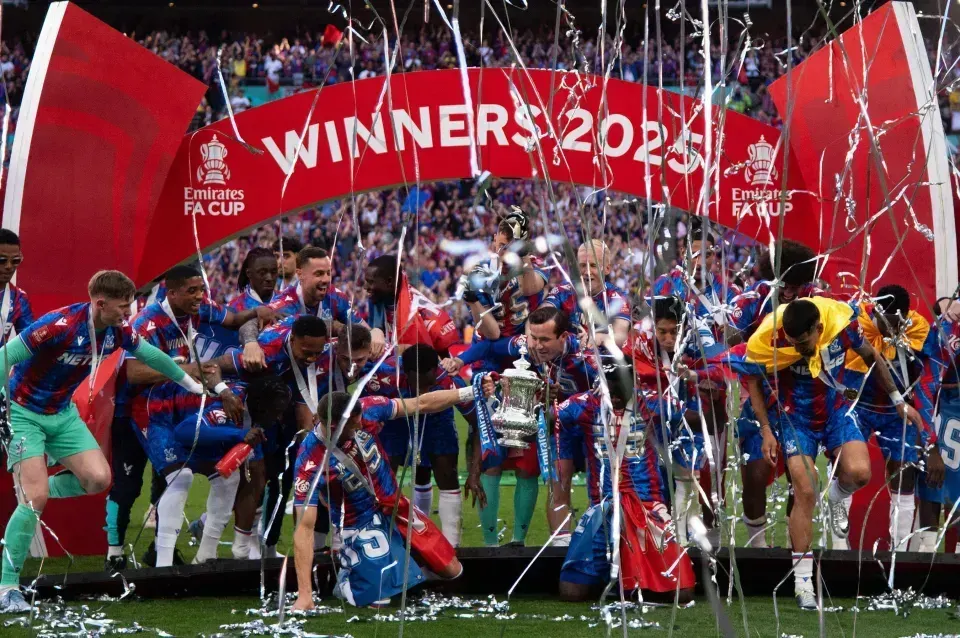
In its decision, CAS echoed its previous decision, confirming that UEFA’s March assessment date was a hard deadline, but went a bit further in declaring that it was a deadline with no “cure.” The ruling also again established that UEFA has a wide scope of discretion in defining control, given the broadness of Article 5.01(c)(4). Finding that Crystal Palace was in breach of Article 5 at the time of the assessment, CAS concluded that UEFA correctly admitted OL to the Europa League because it finished higher in its domestic league (6th in Ligue 1) than Crystal Palace did in theirs (12th in the Premier League). Palace argued they had “higher” sporting merit because they won a trophy (the FA Cup) to qualify, whereas OL “inherited” their spot after PSG won the French Cup. The Panel also rejected this, ruling that both clubs qualified on equal terms based on sporting merit.
In its decision, the Panel identified four indicators to determine whether a board member had a “decisive influence” on both clubs, as required by Article 5.01(c)(4). While Article 5’s broad language provides UEFA with significant discretion in deciding whether a member has exerted “decisive influence” on a club, the Panel relied on unbinding language from UEFA in a December Circular sent to clubs on how to determine whether this influence is present. The Panel devised a roadmap of the following indicators to help determine whether a decisive influence was involved:
- First indicator: shareholders’ or members’ rights
- Second indicator: financial support
- Third indicator: governance
- Fourth indicator: players’ transfers
With their overall decision, CAS essentially tightened the clamps on MCOs by asserting that UEFA’s authenticity concerns are well-founded and that a proper prior assessment of these clubs is highly necessary, giving UEFA full discretion to decide whether clubs are not adhering to its rules. Additionally, the “decisive influence” indicators, as laid out by the Panel, make it even more difficult for large ownership groups to hide financial backers who possess even the slightest say on the outcome of field operations.
Van Daele’s Dual Managing Role
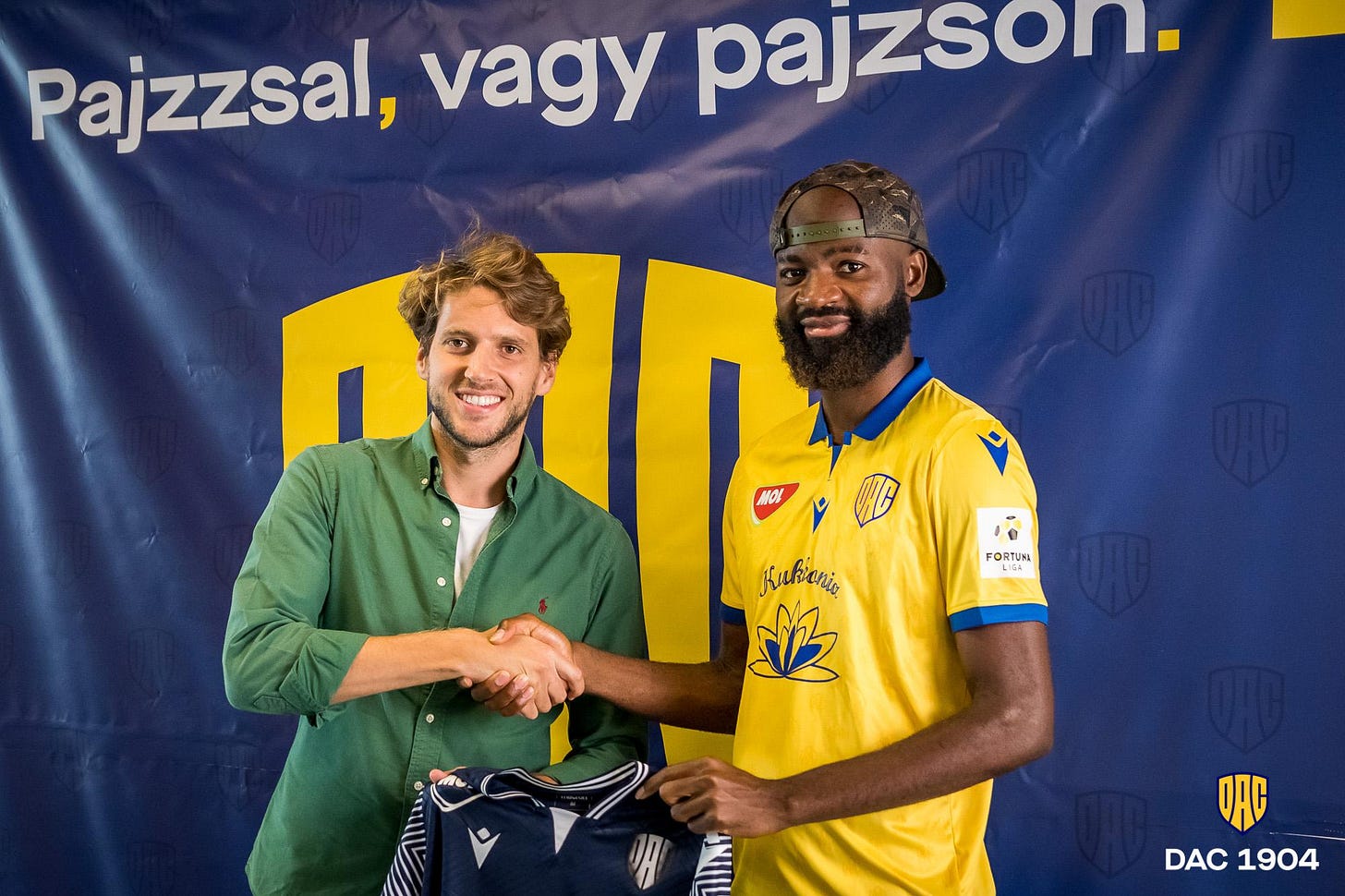
The final MCO case snatching headlines last year was a decision awarded in FK DAC 1904, A.S. v. UEFA, CAS 2025/A/11566, Award of 31 October 2025.
On March 1, 2025, both FK DAC 1904 and Győri ETO FC confirmed that Jan Van Daele held senior leadership roles at both clubs. He was Managing Director and sole board member of Győri, and at the same time Vice‑President of DAC’s Board of Directors. Each club admitted he was involved in their management and sporting decisions, giving him the power to influence both sides. This dual role triggered a UEFA investigation after both clubs qualified for the 2025/26 Europa Conference League, with UEFA’s Club Financial Control Body eventually ruling that the arrangement breached Article 5.01.
The upshot of this case wasn’t that Van Daele actually used any influence in his position, but the mere concern that he “could” exert influence, thereby creating a possibility of a perceived conflict of interest amongst the public. Based solely on this potential, the Panel determined that the legal threshold had been crossed.
Like Droheda, DAC argued that the change was unfair and invalid, claiming clubs had expected extra time to rearrange ownership before European qualification was finalized. CAS again disagreed, stating that proper notice was given, in some cases several times. The ruling again hammered home that MCO compliance must exist on the assessment date, and since both DAC and Győri were in conflict on that date, one team had to be banished to the lower levels. Since both teams finished fourth in their respective domestic leagues, the tie‑breaker came down to their nations’ UEFA association coefficients. Hungary’s ranking was higher than Slovakia’s, meaning Győri kept its place while DAC was exiled to MCO purgatory. While, in whole, this decision affirms UEFA’s overall power to determine which teams can qualify for its tournaments, it also essentially approves the use of its own coefficients to resolve any other ties or discrepancies that may arise.
This case sends a warning shot across the bow of all MCOs seeking to compete in European football competitions, showing that UEFA’s zero tolerance for noncompliant MCOs will not be challenged by CAS. It further reinforces that executives can’t sit on two sides of the same competition table, even in different countries, making it essentially impossible for a single management team to replicate success across its entire football club portfolio.
MCOs Are Taking Note

For investors and ownership groups managing multiple teams, the message was clear – get compliant early or risk losing everything. The March assessment deadline for MCOs won’t be going anywhere, despite requiring MCOs to declare their status well before a conflict may even be budding within the domestic competition ranks. CAS has made this clear, and until a case can provide evidence that providing the financial and legal structure of teams three months before a season concludes is too early, this date won’t change.
The rigidness of how CAS decides whether a member of both clubs has a “decisive influence” also throws a wrench into many of the investment group’s plans.
Some investment groups on the verge of a mass football club collection are already reconsidering whether or not dipping their toes into the MCO waters is even worth it. Last month, the Fenway Sports Group, owner of Liverpool, the Boston Red Sox, the Pittsburgh Penguins, and others, announced that it is no longer actively considering purchasing a second football team. After expending a copious amount of time and effort analyzing 25 clubs, mainly in Spain, Portugal, and France, their decision to drop the pursuit so close after these CAS decisions should raise alarm bells.While FSG may be the first to realize that Article 5’s strict restrictions, with no opportunity to cure, will make any streamlined football success extremely difficult, many MCOs and those debating starting a football club collection may come to realize that the potential paydays may no longer be worth it.
The hesitance surrounding MCOs already spiked after 777 Partners’ epic collapse following their failed attempts to acquire and simultaneously manage a slew of teams, including Everton, Genoa, Hertha Berlin, Vasco da Gama, and others. However, thanks to these recent CAS rulings, large Investment Groups like BlueCo, Silver Lake, and RedBird are already changing gears on how they approach the possibility of purchasing another football club, making it seem as if UEFA has successfully extinguished its MCO concerns by making this once popular drug a much more difficult pill to swallow.